ABOUT.
Bio
Greetings, I am Greg Palombo. I grew up in Buffalo New York and attended Alfred University where I received a BFA and minor in Art History. I now live in southwestern Utah, in a town called Hurricane. Here I work as a furniture designer and maker.
Statement of Work
The work I make takes on various personalities, but it all falls under a methodology of how they are conceived, designed and executed. The genre of furniture has so much to offer, and I am always responding to history, form, color, material, or workmanship. Each piece I make addresses an idea, or a combination of them. Working in this mode leaves little allegiance to an particular visual aesthetic which keeps the work fresh and exciting. I am always on my toes trying to dip and dodge through new challenges and hurtles in the design process. It leads to a lot of failure but the pursuit is what keeps me jazzed. When designing I always try to think about what a piece can become rather than what it is. Through this I hope how to express something beyond just function.

Research and Approach
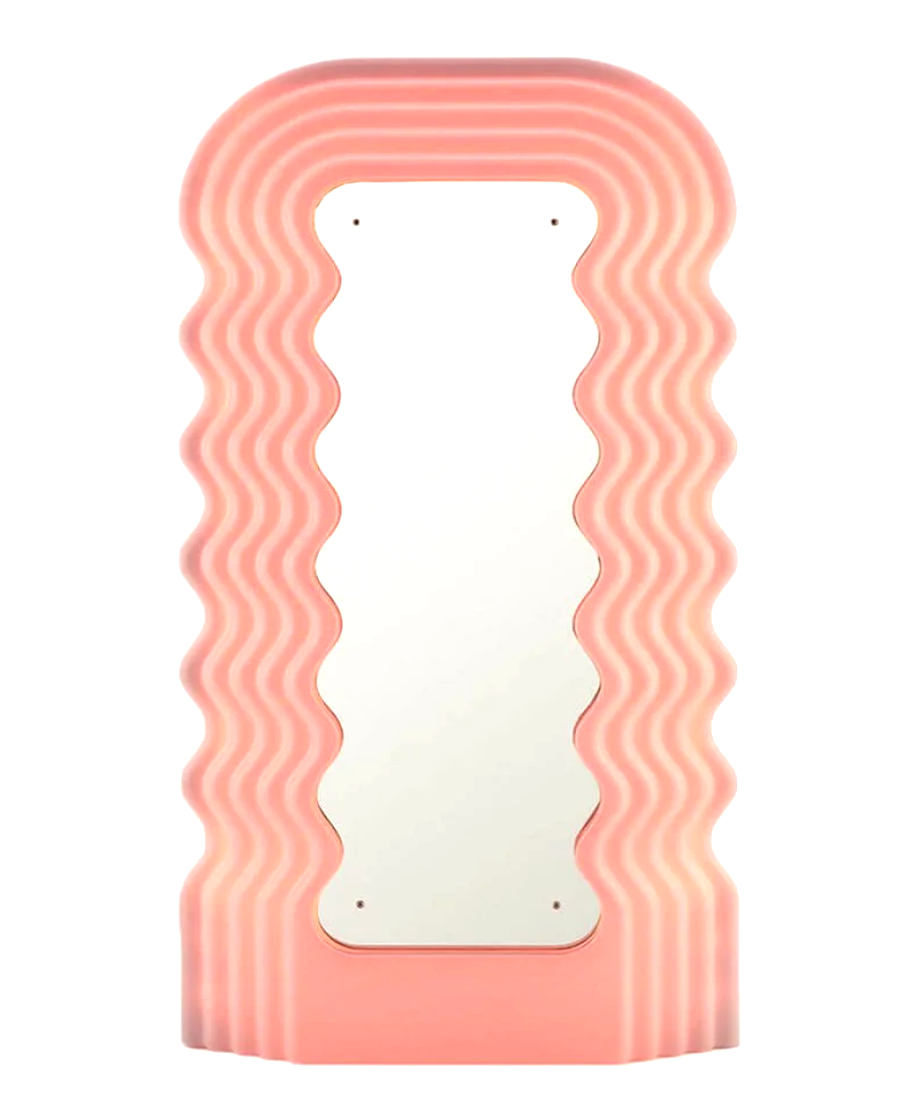
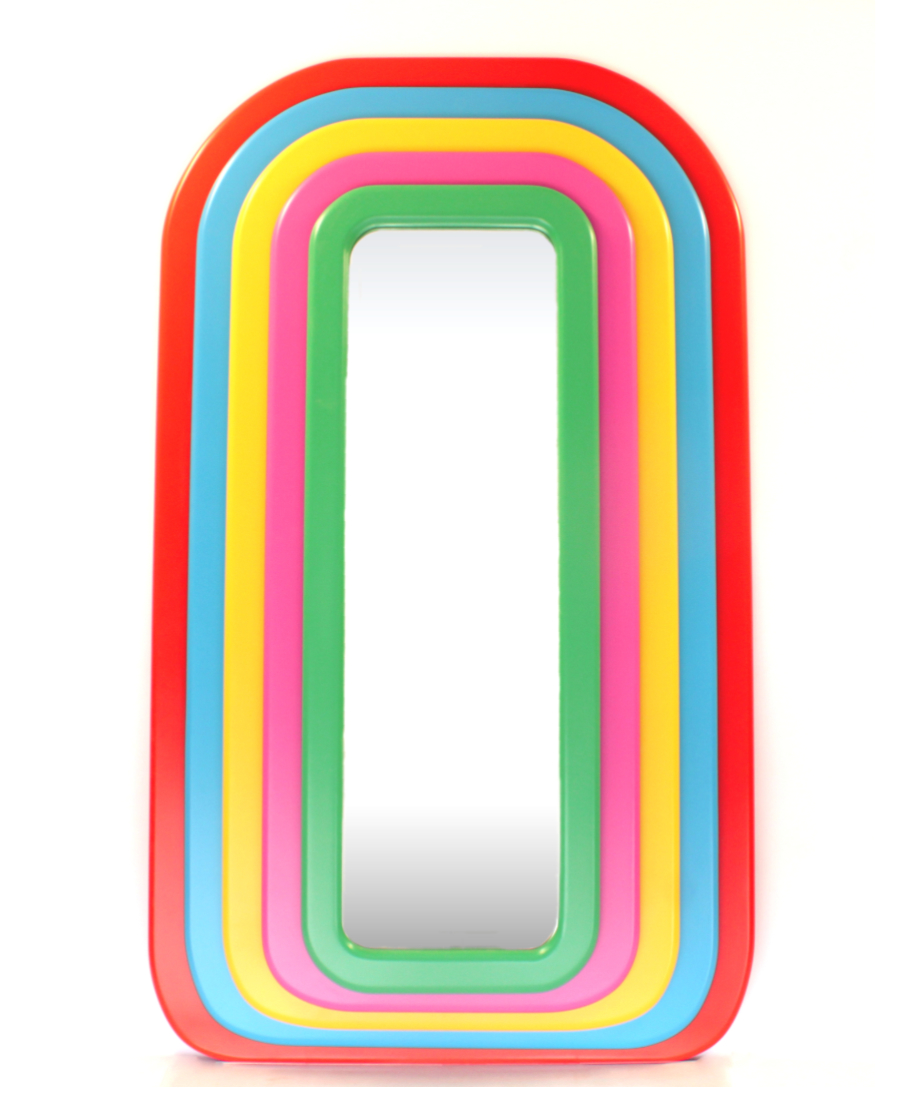
Ettore Sottsass’s Ultrafragola mirror from 1970 compared with Greg Palombo’s UltraRainbowla from 2022. The piece is a clear call to Sottsass that explores a simplified form, alternative color scheme, the idea of how one views themselves, and “selfie” culture.
A piece always starts with an idea and a period of research where I suss out very general things. Ideas are usually inspired by a historical work, a solution to a problem, a response to materials, or the pursuit of workmanship. Different ideas have different solutions when creating a successful piece. I strive for solutions that physically express themselves when viewing or experiencing a piece. If a piece easily communicates the ideas behind it, that is what makes it a work successful. To create successful solutions I look at historic and contemporary works of all kinds to examine how others express ideas in a clear and effective way. I pick apart the work and distill the piece to channel it’s lifeblood and discover the formula that was used to solve the problem of creating a good work. I try and use that formula and reapply it to my work, plugging in different numbers and variables to reach an original outcome. Referencing and understanding exceptional works allow me learn from my predecessors and contemporaries in order to figure out how I will express whatever I am trying to communicate in a clear and effective way. Sometimes I succeed, sometimes I fail.
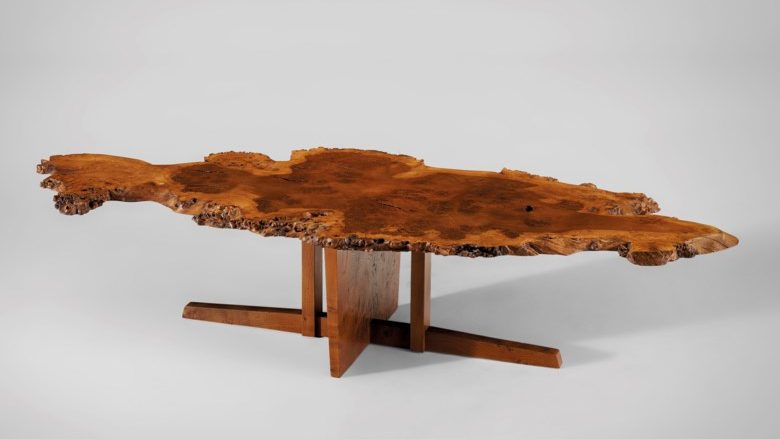
Nakashima used as reference for the colorful console table below. Nakashima’s work possesses an amazing energy through the use of “live edge slabs” which showcases the organic nature and irregularity of trees. I attempt to use the essence of this organic energy in the console in a way that calls to Nakashima’s work but does not copy his canonized style. The result was a piece that possesses an unexpected psychedelic energy.

Console table by Greg Palombo, 2023
As I come to some conclusions through research I start drawing and putting together different options about how the piece will look in order to express a certain idea. At this point I also start reconciling scale, material type and a finish for the piece. After an indeterminate amount of drawing, writing and hypothesizing, I try to arrive at about three final options that will be made into small models. After determining which model I like most, I do one more push of drawing to explore the subtleties of that design so it feels thoroughly investigated. Sometimes this does the trick, sometimes the design process continues to get drawn out.
Typically I work on multiple pieces at a time and I really take my time. Many ideas fall by the wayside but if one sticks in my mind, I keep working on it slowly. Currently there is a piece that I have made three full size iterations of over the past three years. I have made countless attempts to reach a conclusion I like, but it hasn’t worked out. Hopefully I will nail it down soon for the full sized pieces keep missing the mark. But this is how the process goes.


Three models for an oak dining table that explore subtle changes of the top in relation to routered edges (rounding out hard 90 degree angles) on the legs and underside of the table top. The impetus for this table was to make a very simple table who’s subtle details in the leg’s taper and profile mirror that of the top’s profile. The ultimate goal was to create a table who’s every detail is addressed in a conscious way so nothing is left as an after thought. They say the devil is in the details. The more of the details you notice, the more charming the table’s design becomes.
Building Process and a Guarantee of Quality

I am a one man show which gives me an overwhelming feeling of ownership and responsibility for the works that come from my shop. I design all the work, I cut every board and make everything at every single step of the process. Needless to say, I take pride in my work as it is a direct representation of me.
The first step is getting the materials. I go to the lumber yard and hand select all of the boards in order to get the best quality materials to ensure a level of quality many others can’t. Each piece is made meticulously, focusing on workmanship that ensures a great peace visually and one that will last generations to come. As I am the only one who works on it, nothing falls through the cracks leading to a degradation of quality. Everything is attended to to ensure customers get the highest quality piece. I have been making custom furniture professionally for the last 6 years and I have become an exceptional craftsman during this time.
All furniture from my shop comes with a guarantee of craftsmanship and the materials used. If any piece fails because of material defects or an issue of craftsmanship, the piece will be repaired at no cost. However I am not responsible for refinishing worn work, or repairs to pieces that have sustained unnecessary damage which led to their failure. I also bare no responsibility for shipping/ delivery costs pertaining to repairs covered under my guarantee.
 Greg Palombo